Houthi missile attack damages Riyadh’s tallest building
Saudi authorities reported no injuries after the November 19 attack damaged PIF Tower and neighbouring buildings in the capital’s financial district.
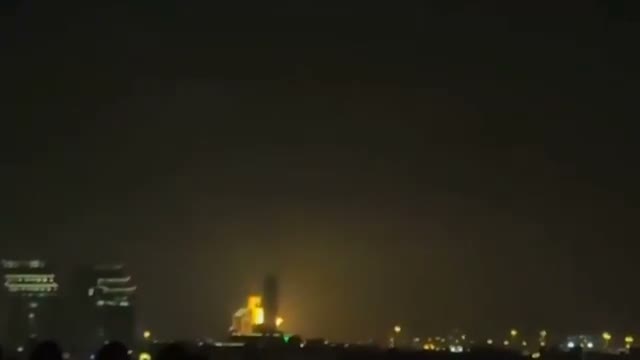
A Houthi attack damaged Riyadh’s tallest building on November 19, 2026, bringing the conflict in Yemen to a landmark of Saudi Arabia’s financial ambitions. Saudi authorities reported damage to several floors and neighbouring buildings, with no injuries reported.
The building is the Public Investment Fund Tower in the King Abdullah Financial District. In its November 19 statement carried by the Saudi Press Agency, Saudi Civil Defence said its teams responded to a tower damaged in an attack it attributed to the Houthis. The statement described the affected property without naming the tower.
Reuters identified PIF Tower from the photograph accompanying the announcement. The damage puts two questions before Saudi officials and businesses operating in the district: how quickly the site can safely reopen, and how to protect normal activity while the threat of further attacks continues.
View the original post on X
Source: Drop Site on X, post showing the reported PIF Tower attack, November 19, 2026.
What is confirmed about the damage
Reuters’ reporting from Riyadh described broken windows across seven to eight floors and bent sections of the tower’s metal exterior. It also reported that the financial district closed to visitors after the attack.
The coalition’s account was more limited about the weapon’s final trajectory. In a separate statement published by the Saudi Press Agency, spokesperson Turki al-Maliki said forces had dealt with a missile threat towards Riyadh and that an initial assessment found falling fragments and property damage. Reuters cited three sources who said an incoming Houthi missile struck the building.
Those accounts establish damage during an attack while leaving the precise sequence open. A technical assessment would need to distinguish damage from a missile, its warhead or fragments following an interception. Photographs of broken glass alone cannot settle that question.
For people returning to nearby offices, the immediate issue is access to a safe building and street. Civil Defence said the responsible authorities had implemented their response procedures. Its statement did not publish a repair bill or a timetable for normal operations.
A prominent address for Saudi economic ambitions
The tower is a recognisable part of a district designed to attract investment and business. Architectural firm HOK describes PIF Tower as an 80-storey commercial skyscraper and Riyadh’s tallest building. Its description includes a podium connecting the tower to surrounding public spaces, with dining facilities and an auditorium.
HOK also describes an exterior designed to shade the glass and reduce heat entering the building. That makes visible damage to the facade relevant beyond its appearance. A professional inspection would have to assess the affected components and determine what repairs are necessary before damaged spaces can be occupied.
The tower’s association with the sovereign wealth fund adds to its significance. PIF finances domestic development and invests internationally. Its announcement accompanying the 2025 annual report describes a mandate combining financial returns with Saudi economic transformation.
The fund said it had invested more than US$199 billion domestically between 2021 and 2025. It also described partnerships with international financial institutions and investments spanning infrastructure, technology, manufacturing and financial services.
Analysis of the attack’s economic effect therefore needs to separate physical repairs from confidence in the wider investment programme. Damage to an office tower creates an operational problem. Establishing whether it changes investment decisions would require evidence from tenants, lenders, project sponsors and the fund itself.
PIF’s annual report announcement puts that distinction in perspective. The fund described funding through bonds and commercial paper, a way of borrowing for shorter periods, as well as partnerships with asset managers. These activities connect Saudi development to institutions outside the kingdom. Analysis of any financial fallout should therefore examine the terms on which money is raised and projects proceed. A damaged headquarters, by itself, supplies no measurement of either.
AFP quoted risk adviser Mohammed al-Basha as interpreting attacks on prominent towers as an effort to weaken confidence in the Saudi development programme. Gulf security analyst Anna Jacobs told the agency that negotiations remained necessary even if Saudi Arabia responded militarily. Together, those assessments point to the tension between demonstrating protection in the short term and reducing the threat over a longer period.
The Houthi claims and the Saudi response
Houthi military spokesperson Yahya Saree said the group targeted Riyadh’s financial district twice on Thursday, according to AFP’s report published by ABS-CBN. The group also claimed attacks on an airport, a petrochemical facility and an air base. Those claims need separate verification.
AFP reported that many employees in the PIF building had already been working remotely since September, citing workers. That helps explain the context in which the tower was operating, although it cannot establish why nobody was reported injured in this particular attack.
The news agency also described an escalating confrontation between the Iran-backed Houthis and Saudi Arabia, which supports Yemen’s internationally recognised government. A damaged commercial landmark gives that confrontation a visible presence in the capital.
There are competing pressures on Saudi decision-makers. Protecting residents and infrastructure creates a demand for effective defence and a response to further threats. At the same time, businesses need predictable access, transport and communications. Further military escalation can make those conditions harder to provide.
For the Houthis, statements about intended targets are evidence of what the group claims. They do not independently establish the damage at each location, the weapons that arrived or the number intercepted. The same standard applies when assessing the coalition’s account of defensive operations.
What the photographs and video can establish
Reuters’ video report says it confirmed the location using surrounding buildings matched against archive and satellite imagery. That provides a basis for placing the published footage in Riyadh’s financial district. It does not establish the reliability of every version circulating online.
An image showing a flash, smoke or flames captures a moment within the camera’s field of view. The original recording, its timing and the surrounding landmarks matter when deciding whether it depicts this incident. A caption added by someone reposting the clip can introduce claims absent from the recording.
There is a further distinction between the instant of an explosion and a sustained fire. Footage of a bright flash can demonstrate visible activity without establishing how long a fire lasted, which floors were affected or whether emergency teams later found additional hazards.
Earlier attacks on Saudi airports and other buildings also appear in searches for the Riyadh incident. Each has its own location, date and casualty record. The November 19 tower statement reported no injuries; casualty figures from an earlier airport attack should stay attached to that event.
Civilian protection and the wider conflict
The International Committee of the Red Cross explains that parties to armed conflict must distinguish between military objectives and civilian people and property. Its account of international humanitarian law also describes duties to take feasible precautions and avoid excessive incidental civilian harm.
Saudi Civil Defence characterised the targeting as a violation of humanitarian law. An independent legal assessment would require evidence about the intended objective, the circumstances and the conduct of those responsible. A building’s connection to a government fund does not, by itself, answer the questions required for such an assessment.
The relevant obligations extend to people on both sides of the border. In Yemen, renewed fighting exposes communities to further disruption while making political negotiations harder. An explanation of the strike should account for those consequences alongside the damage visible in Riyadh.
The United Nations special envoy’s office has described inclusive dialogue, economic stability and de-escalation as parts of the effort towards a political settlement. Those priorities address problems that repairing a tower or intercepting another missile cannot resolve.
What Canadians should watch next
For Canadians living, working or travelling in Saudi Arabia, the most immediate reference is the Government of Canada’s current travel advisory. At the time checked for this article, Ottawa advised against non-essential travel to the country because of the volatile regional security situation.
The advisory warns that missile and drone attacks can disrupt airports and that closures may happen with little warning. It recommends following local authorities, monitoring developments and preparing contingency plans. Travel decisions should take account of the specific airport and route, alongside conditions at the destination.
Canadian companies with staff or counterparties in Riyadh face practical questions about office access, meetings and alternative arrangements. An employer’s first useful update is whether its people are safe and whether they can reach their workplace under current official instructions.
The next reliable milestones will be an updated safety assessment, information about access to the affected buildings and any further statements on the attack. Those details will show whether the disruption is easing and give residents a firmer basis for deciding when normal routines can resume.
For readers following from Canada, the useful distinction is between an immediate incident and a lasting change in conditions. Evidence that an office has reopened would answer a question about that location. Evidence of fewer alerts, dependable flights and sustained access would speak to the wider environment. Each development has to be assessed on its own date and terms.
Key takeaways
- Saudi Civil Defence reported damage to several floors and neighbouring buildings, with no injuries reported
- PIF Tower is Riyadh’s tallest building and a landmark of its financial district
- The coalition reported falling fragments, while Reuters sources described an incoming missile
- Claims about other targets require separate confirmation
- Canadians should follow current official travel advice and local emergency instructions