Why data centres are testing Ontario’s power grid
Ontario expects data centres to take a larger share of electricity demand as it plans new grid connections and weighs delays at Darlington.
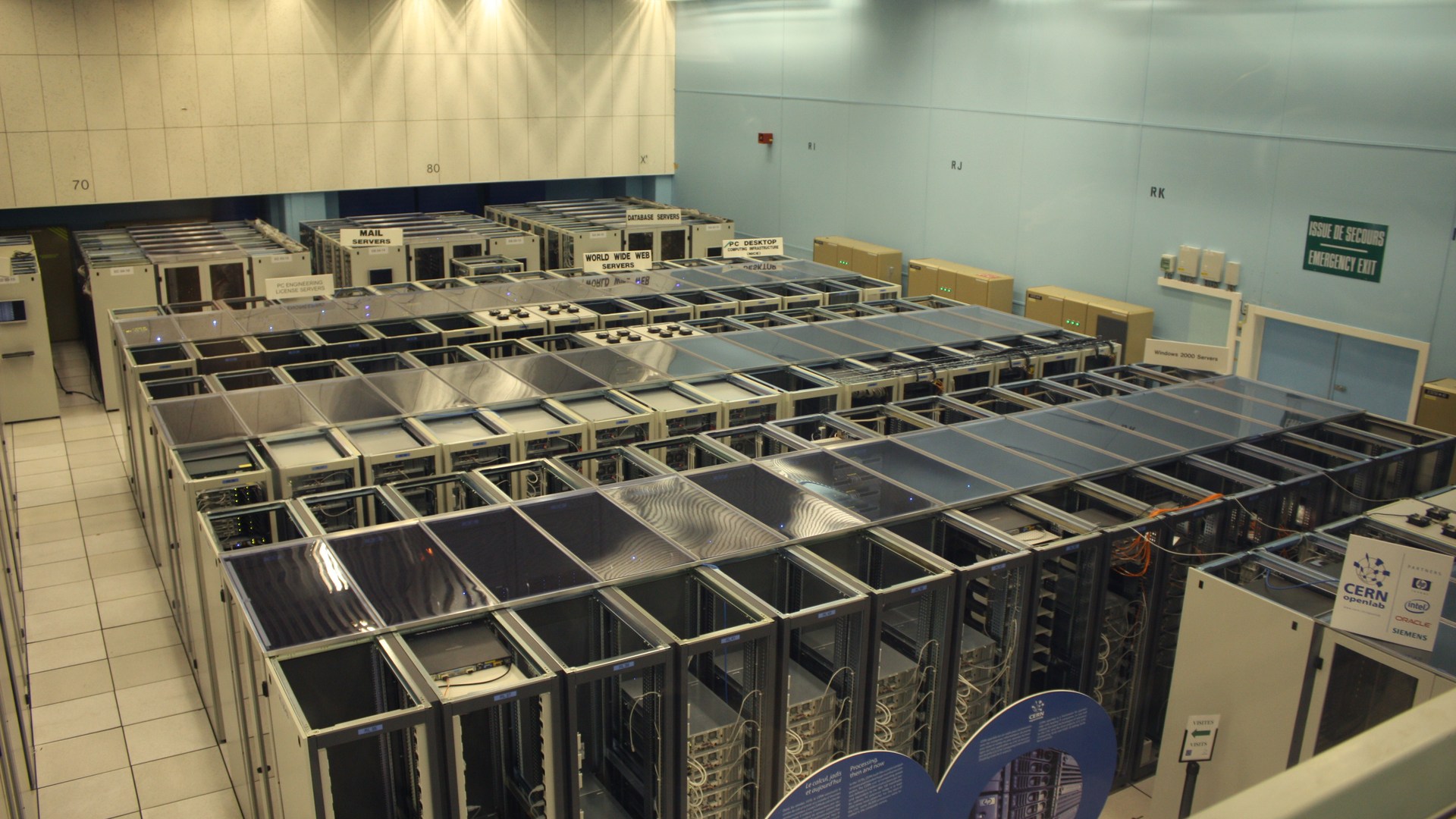
The Independent Electricity System Operator’s 2026 outlook projects data centres will account for 8.6% of Ontario electricity demand by 2050 in its reference scenario. The province has to decide which projects need new transmission, when the capacity can be delivered and how to allocate the cost.
Demand is growing faster at data centres
The International Energy Agency reported that global electricity demand from data centres grew 17% in 2025, compared with 3% growth in overall global electricity demand. Those figures compare demand in 2025 with demand in 2024. Overall electricity demand includes data centres, and the bars show the percentage change in each total. A rapid growth rate for one category can matter to specific grids even when its share of worldwide electricity use is much smaller than the growth rate might first suggest.
Global electricity demand growth, 2025 versus 2024
Data centre electricity demand grew much faster than overall electricity demand worldwide.
The IEA also reports that the energy required for an individual AI task is declining as the technology gets more efficient. More efficient computing can coexist with rising electricity demand if the number of tasks grows quickly or if more demanding services come into wider use. That leaves planners with uncertainty about how much capacity to build. A plan based on current equipment can change when developers install different servers or revise their timelines. The practical question is what the facility and suppliers can commit to at each phase.
Why the connection matters in Ontario and PJM
The Independent Electricity System Operator’s 2026 planning outlook puts data centres at 8.6% of Ontario electricity demand in 2050 under its reference scenario. The operator, known as the IESO, also models other demand paths. The long-term figure is a planning projection, and the province’s actual result depends on which loads connect and on what happens elsewhere in the economy. The centre of the distribution may be useful for planning provincial resources, while the range of plausible outcomes matters when someone is deciding when to commit to construction.
PJM, which operates across part of the eastern United States, described data centre proliferation as a main driver of forecast demand increases in its October 2026 testimony to Pennsylvania lawmakers. A large request can affect planning before a project starts operation. The system may have to study the site, check local substation capacity and work through upgrades on the schedule required to supply the building. A data centre can be valuable to a region seeking investment. An electricity customer who has already been paying for grid service may ask who bears the risk if the promised load changes or never arrives.
Think of two hypothetical sites with identical loads. A location with usable transmission and substation capacity may have a clearer route to service. A location in a congested area may need upgrades even if the province expects enough total generation over the year. The IEA’s analysis identifies location and flexibility as ways of reducing some grid pressures. A developer might choose a site with more available capacity or explore which workloads can shift away from the system’s busiest hours. The usefulness of that flexibility depends on the facility’s workload and the grid operator’s needs.
What Darlington can contribute and when
Small modular reactors are one option for meeting sustained demand for low-emissions electricity. In April 2025, the Canadian Nuclear Safety Commission authorised Ontario Power Generation to construct one BWRX-300 reactor at the Darlington New Nuclear Project site. That decision is a construction milestone from more than a year ago. Ontario Power Generation says it applied for an operating licence for the first unit in March 2026.
In its November 10, 2026 results, OPG said it no longer expected the unit to meet its previously disclosed October 2030 commercial operation target or the earlier cost estimate. The November results did not give a revised date or budget.
The IEA reports that conditional agreements for the purchase of electricity from proposed modular reactors have grown as data centre operators look for supply. Conditional commitments can support the development of a project and signal potential demand. For a local grid, the milestone that changes available supply is delivery. A utility planning for a data centre that expects to connect sooner must still consider resources and transmission available on that earlier schedule.
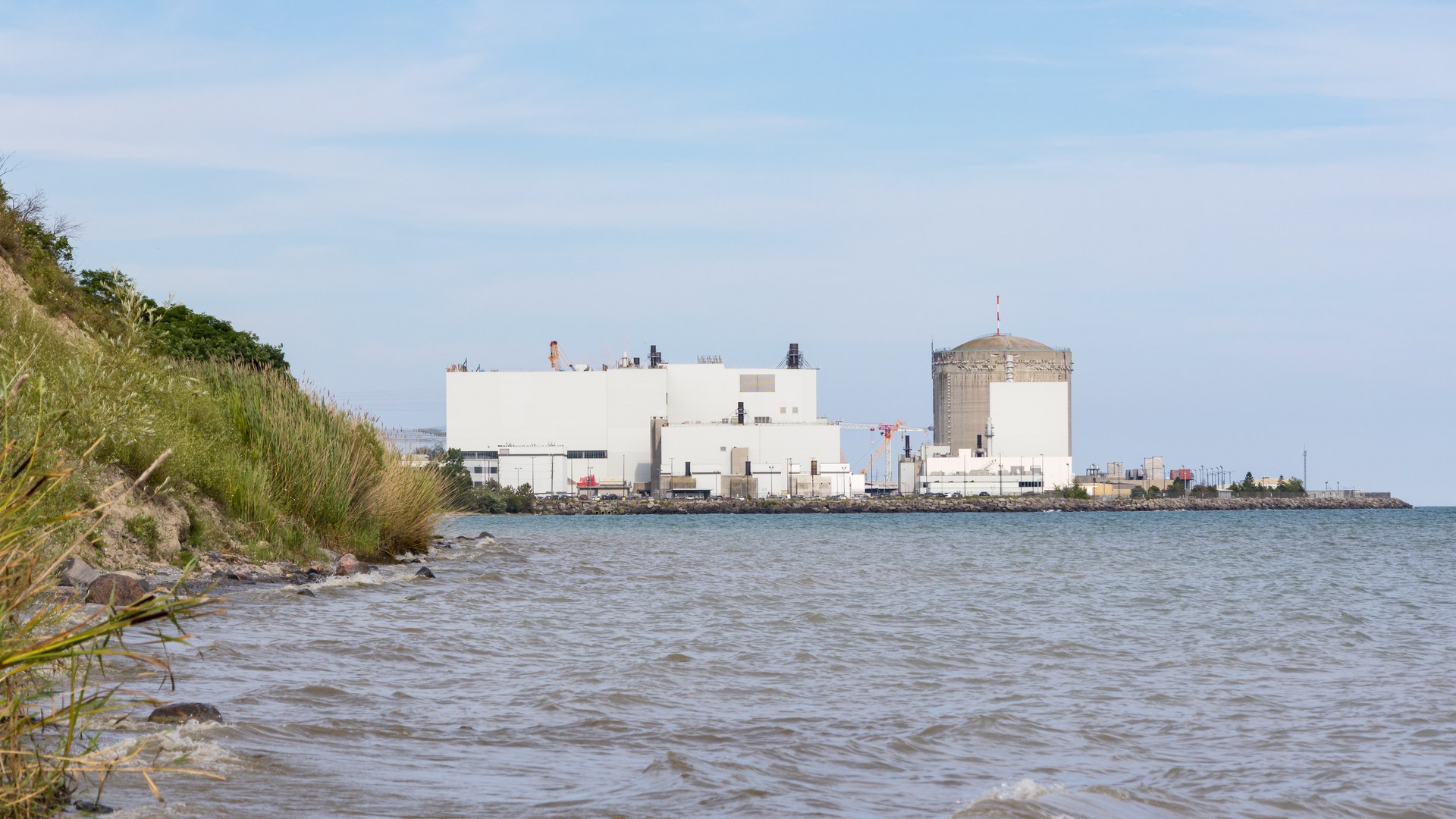
The photograph above shows the existing Darlington generating station. The new reactor is a separate unit under development at the Darlington site.
What batteries can do during a peak
Ontario’s IESO lists the Oneida battery facility in Haldimand County at 250 megawatts and 1,000 megawatt-hours. Dividing the energy rating by the maximum power rating gives four hours at rated discharge on paper. Actual dispatch depends on how charged the battery is and on the terms under which it operates. A charged battery can supply electricity during a short peak and later recharge.
Its ability to cover a longer event depends on stored energy and whether it gets a chance to recharge before the next period of high demand. The Ontario planning outlook describes electricity supply that includes both battery storage and natural gas resources.
Duration helps explain the debate over whether storage can displace a gas peaker, a generating plant called on during high demand. A resource adequate for a short evening peak can be less useful during consecutive periods of high demand. Gas plants have their own constraints, including fuel supply and emissions. The practical comparison evaluates how much dependable capacity each resource contributes under the same system conditions. For a data centre that needs electricity around the clock, that comparison also includes the sources that charge a battery and the generation or imports available at other times.
The next decisions are about location, cost and timing
Utilities and developers also have to distinguish annual energy from the power needed in a particular hour. A developer can contract for a volume of low-emissions electricity over a year and still rely on other supplies during hours when the contracted resource produces less. When someone proposes a round-the-clock supply arrangement, ask what it covers during peaks, planned maintenance and unexpected outages. An annual total answers a useful accounting question. The hourly schedule is what helps the grid operator work through the demand it must serve.
Pacing construction can give both sides more information. A developer with more than one phase could seek service for the first set of buildings while the grid operator studies the next stage. That spreads some commitments over time, although it can make the developer’s delivery dates less certain. Building upgrades earlier could support a cluster of customers, while waiting for firmer commitments can limit the risk of paying for capacity that goes unused. The balance depends on the project and on whether the infrastructure can serve other customers if plans change.
Energy security reaches into equipment supply. Natural Resources Canada’s 2026–27 plan calls for work with domestic and international partners on critical mineral supply chains. The priorities include improving knowledge of deposits and supporting processing and partnerships. Lithium and graphite supply, for example, are part of the picture for some batteries, along with cell manufacturing and access to the rest of the equipment. A project also has to move through financing, procurement and construction. A mineral deposit or a policy agreement is one step in a longer supply chain.
For Ontario, the next useful signals are which connection requests turn into firm loads, how the IESO updates its forecasts, and when OPG releases a revised Darlington schedule. For communities considering an individual project, a public connection decision or tariff proceeding may show which upgrades are required and who is expected to pay. Developers gain more confidence when capacity can be delivered on a credible schedule.
Existing customers gain more clarity when the costs and risks are visible. The planning work has to accommodate both as it balances new generation, transmission and storage.
Key takeaways
- Worldwide data centre electricity demand grew 17% in 2025.
- Ontario’s 2050 data centre demand share is a planning projection.
- Local transmission capacity shapes the timing of data centre connections.
- OPG expects its first Darlington SMR to miss the earlier October 2030 target.
- Battery power and battery duration answer different grid questions.
- Critical mineral supply and equipment delivery affect how quickly projects can proceed.